When Zambians and Malawians meet, they call each other achimwene or baneba—brothers split by a colonial divide.
This is not cheap talk. Many communities on both sides share the same bloodlines, surnames, food and traditional rites and cultural values.
It was colonial administrators’ scramble for Africa in the late 19th century which drew the boundary between what is now Zambia and Malawi.
Nationalists blame the brains at the Berlin Conference of 1884-1985 for dividing the continent like a piece of cake, splitting people who were traditionally one tribe while lumping together avowed foes.
When Malawians and Zambians along the porous border meet, it is clear the maps are nothing but lines drawn based on oral descriptions and natural features like watersheds with no clear physical markers.
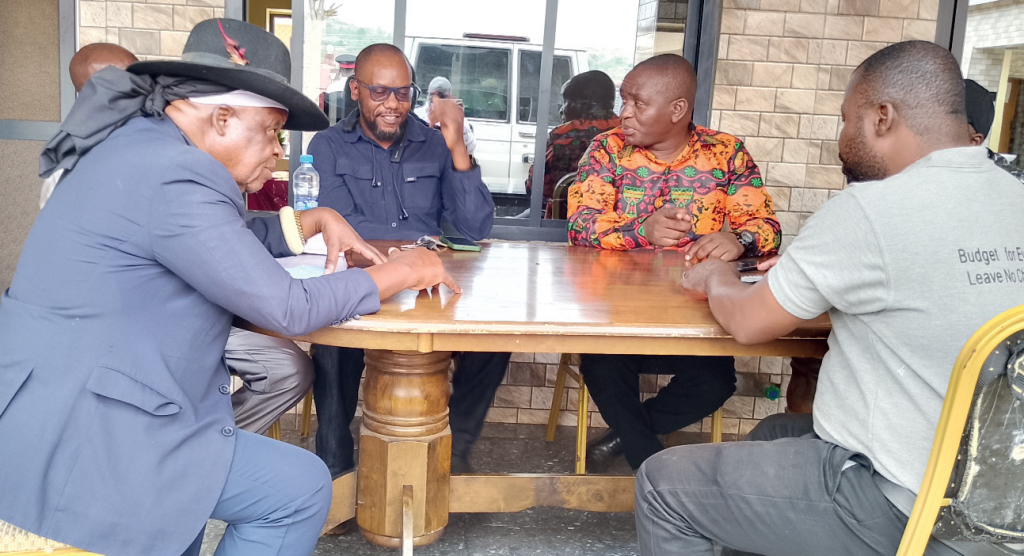
Due to this lack of clarity, divided local communities with shared history, geography and culture—the United Nations definition of a nation—now navigate disputes, physical barriers and other ambiguities that persist in some areas.
For communities in Chitipa District in Malawi and Isoka District in Zambia, however, the spirit of togetherness is unmistakable.
People of the two districts not only share blurry borders, but also social amenities, including healthcare, roads, markets and farmland. They intermarry, trade together and mourn shared kinsfolk.
Anthony Kapesa, from Chisankhwa, Senior Chief Mwabulambya in Chitipa, settled in Nakapelekese in Isoka for farming due to limited land at home.
“The chiefs and communities welcomed me well. They gave me a place to live and cultivate. I feel at home and food-secure,” says the man who grows maize, groundnuts and sunflower.
Similarly, Joyce Simfukwe of Nalutete in Isoka describes Malawians as “my people”—relatives.
“We have many things in common,” she says. “Malawi and Zambia are one. We go to Chitipa District Hospital when sick and our children are born there because it is the closest health facility.” Simfukwe says.
Since Malawi and Zambias won independence from Britain in 1964, much of northeastern Isoka has relied on social services from Chitipa and intermarriages have strengthened these geopolitical ties.
The realisation that there are many things that unite Africans than those that divide them has given rise to the push for regional integration across southern Africa. This has not only dialled up calls for open borders, open skies to ease the movement of people and goods while boosting trade in their region, but also a united front to confront shared challenges. In the words, the proponents of regional integration say a crisis in one country is a shared emergency and it cannot be eliminated unless neighbouring countries put their resources together to create a safe world for all.
The consensus is vividly illustrated by regional efforts to combat cross-border disease outbreaks such as Covid-19, cholera and Ebolavirus.
Shared pathways
When Zambians travel to Mphungu ward on the other side of their copper-rich country, they often pass through Malawi.
This has prompted the Zambian government to improve roads and build healthcare facilities along the boundary, especially in Kanyala, to ease congestion and reduce the burden on Chitipas facilities.
Isoka district commissioner Jairo Simbeye describes the relationship between the two districts as cordial and strong.
He states: “The people of Malawi are amazing. From the general hospital in Isoka, it is 160 kilometres to Chaswata. From Chaswata or Chitunji to Chitipa, it is just eight kilometres. Zambians prefer going to Chitipa, not just because of distance, but because of our shared relationship. We are one people.”
Simbeye says the relationship should go beyond service provision.
“We should share ideas and develop together. Chitipa should not be overburdened because of better services. Isoka should develop equally. Exchange visits between our district councils’ staff can help us learn from each other,” he says.
Shared tongues
Most people in Isoka speak Lambya.
Senior Chief Mwabulambya in Malawi confirms the shared identity between the communities.
“Malawians and Zambians share the same roots and languages: Namwanga, Lambya, Nyika, Tumbuka and others. Crossing the border, you do not see a difference. That is why services are extended across Zambia to Malawi, including health and market services,” says the traditional leader.
Chitipa District Council director of administration Clement Gonthi describes the cross-border relationship as historical and good.
“I am glad that our people treat each other as brothers and sisters. We share language, food, names and social amenities. Our cultures, celebrations and behaviours are similar. We hope this partnership continues and that both districts develop together.”
For Gonthi, developing together has mutual benefits.
“If Isoka prospers, Chitipa benefits. If Chitipa prospers, Isoka benefits. That is how interdependence works. Maintaining this good relationship is crucial, “he says.